
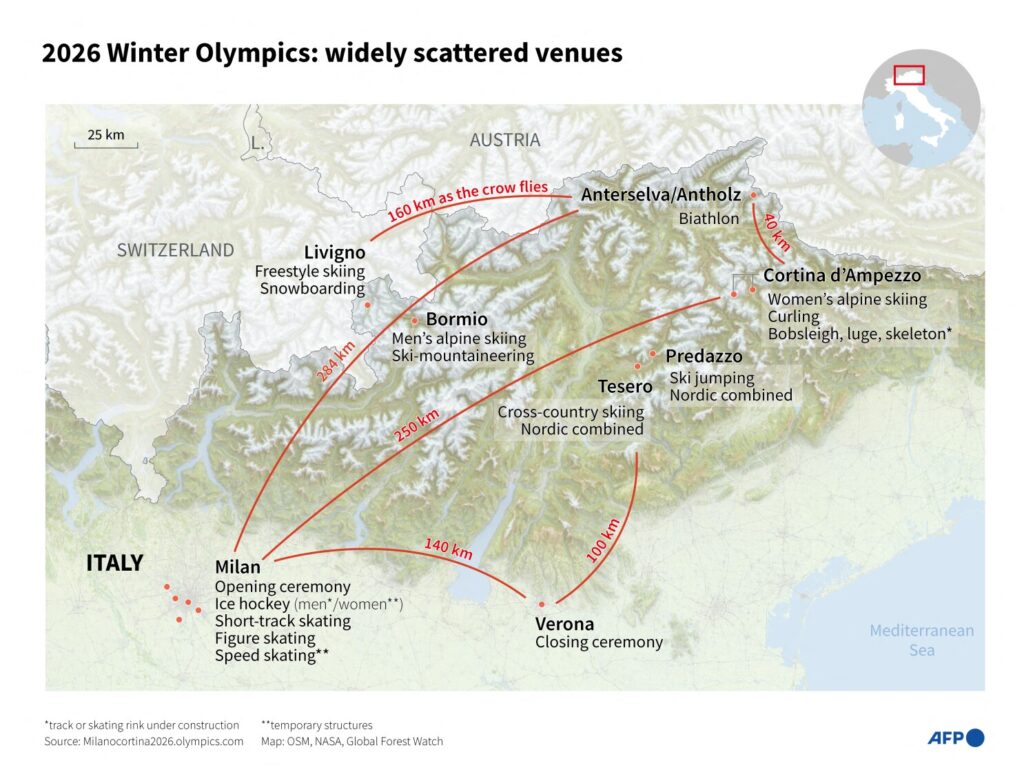
The 2026 Winter Olympics will be unlike any other in recent history, as the Games will not be confined to a single city or compact region. Instead, events will be staged across several locations in northern Italy, transforming the Olympics into a nation-wide spectacle that stretches from modern urban centers to dramatic alpine landscapes.
At the heart of the Games are Milan and Cortina d’Ampezzo, the official host cities. However, competitions will be held far beyond their borders, extending to venues in the Veneto, Lombardy, Trentino-Alto Adige, and other surrounding regions. This wide geographical spread reflects a new approach by Olympic organizers, emphasizing sustainability and smart use of existing facilities rather than building large, temporary structures that may not serve long-term community needs.
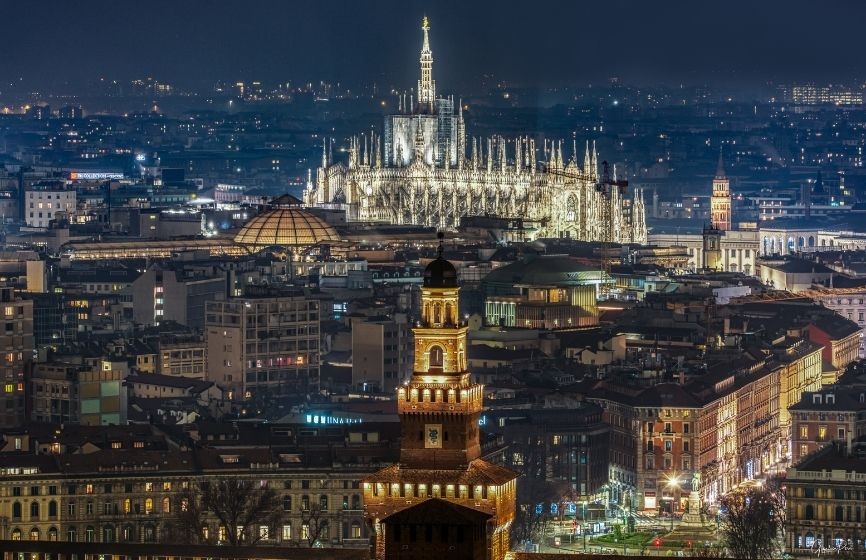
Milan will become the focal point for many of the ice sports and major ceremonies, offering its world-class arenas and transport infrastructure to accommodate athletes and spectators from across the globe. Meanwhile, Cortina d’Ampezzo, known as the “Queen of the Dolomites,” will host the most visually striking alpine events, including downhill skiing, surrounded by the dramatic peaks of the UNESCO-listed mountain range.
Other competitions will take place in established winter sport hubs, such as Livigno, Predazzo, Tesero, and Bormio, all of which already possess internationally recognized facilities. By relying on these pre-existing locations, Italy is positioning the 2026 Games as one of the most environmentally responsible in Olympic history. Organizers aim to reduce construction waste, limit land disruption, and create a lasting legacy that benefits local communities long after the final medal is awarded.
While the scattered nature of the venues presents a complex logistical challenge, it also opens up a unique cultural opportunity for fans. Visitors attending the Games will not only experience elite athletic performances but will also travel through diverse parts of Italy, discovering local traditions, regional cuisine, historical towns, and breathtaking landscapes that few single-city Olympics could ever offer.
The decision to distribute the venues across Italy signals a shift in how the modern Olympics can be organized. Rather than concentrating the event in one massive complex, the 2026 Winter Games will feel more like a journey through the heart of a country known for its beauty, history, and passion for sport. This ambitious layout is expected to set a new model for future host nations seeking to balance global celebration with environmental responsibility.
As the countdown continues, one thing is certain: the 2026 Winter Olympics will not only test athletes on snow and ice, but will showcase the full geographic and cultural breath of Italy to the watching world.